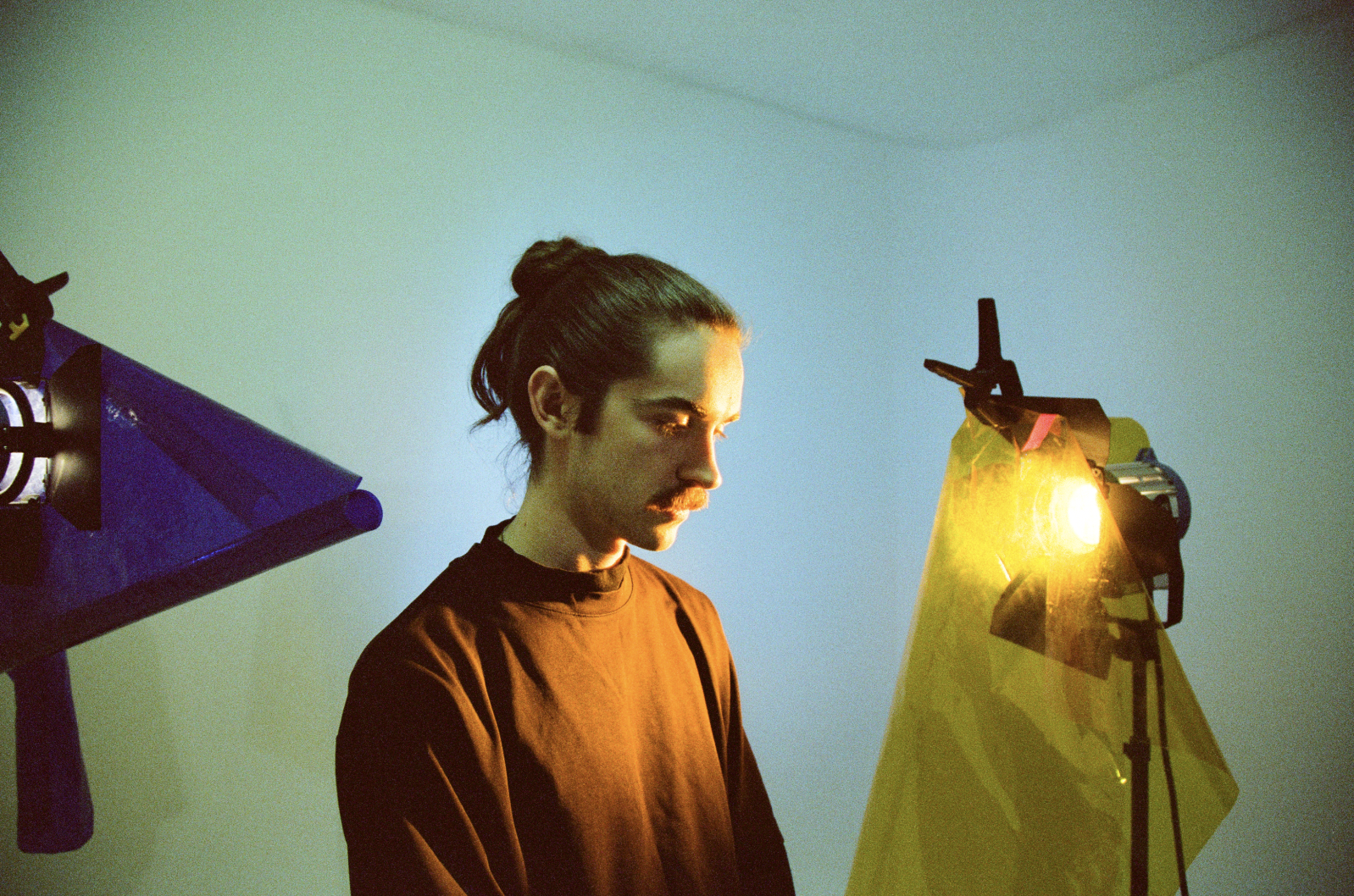
Hey Corban, thanks for taking the time to talk to us today. Could you tell us a little known fact about yourself?
No problem! I have three older sisters and two of them are coeliac like me. Always looking for good gluten free treats.
You recently released your Maybe We’ll Make It EP as a prologue, three acts and an epilogue, so why was it important for you to give this record a more theatrical structure?
I think it’s a case where the whole is greater than the sum of its parts; and to me, the greater, more interesting and exciting thing, was to look at how each song spoke to each other and enhanced the overall experience and meaning of the record. The story and larger experience it creates is more compelling than the songs alone. I found that exciting and chose to lean into it.
Are there specific songwriting tricks, limitations or happy accidents that ended up defining the sound of this record?
Coming from a production background, the entire record was really an exercise in songwriting for myself. A major focus was on the lyrics, and something I was looking into was writing in a ‘lyrical key,’ so to speak, which I think helped my word choice and diction to enhance the direction of the song. Another thing I would do was write the melody and lyrics first, producing the drums and bass and sound effects, maybe some additional melodies in other instruments, and finally the chords and harmony. I think every song except ‘Let’s Not Talk About It’ was written like that, and I think that’s why those songs harmonically are able to be so wild and a little bit through-composed.
In ‘Greener’, how did you use gardening metaphors to explore the long-term effects of a breakup?
I think breakups are such a universal experience that sometimes it’s hard to write anything interesting about them, and using metaphors and figurative language is a way for me to increase the strangeness of a familiar concept. Gardening itself, and nature in general, can call to mind sometimes opposing connotations; nature is the wild, larger than human force, utterly indifferent to us, but also it’s growth and sustenance and fecundity. This contradiction became the lens through which the song was written.
What instruments did you weave into ‘Braid’? What effect did you intend to create here?
Braid has a very sparse arrangement, I was trying to leave a lot of room for the vocals to create a closer and intimate feel. I even left in a lot of the mouth sounds and clicks so it stayed a little ASMR-y, which usually would sound like a mistake to me. The instrumentation is pretty stock-standard for an R&B ballad — Rhodes, piano, guitar; I think I was layering snares in a weird way for this song. The things that stick out as unconventional in Braid are the hi-hat programming, with rolls and panning more like a trap song; the bass sound is a guitar pitched down an octave, which creates a deeper, rounder sound than a normal bass guitar; and there’s an acoustic guitar at the end that we used a contact mic for, a microphone usually for strings, which makes me feel like I’m inside the guitar.
What else do you hope that listeners will take away from these songs?
I hope they’ll want to listen again and again and again, I really packed a lot of info in there and I think they stand up to repeat listens — there’s always new things to hear. I hope listeners resonate with them and feel a sense of comfort.
What’s next for you?
What’s next is shows around NYC, I’m organising a live session for Maybe We’ll Make It, and I’m working on the next EP! Lots of work to be done.
Follow Corban Chapple on Instagram.

