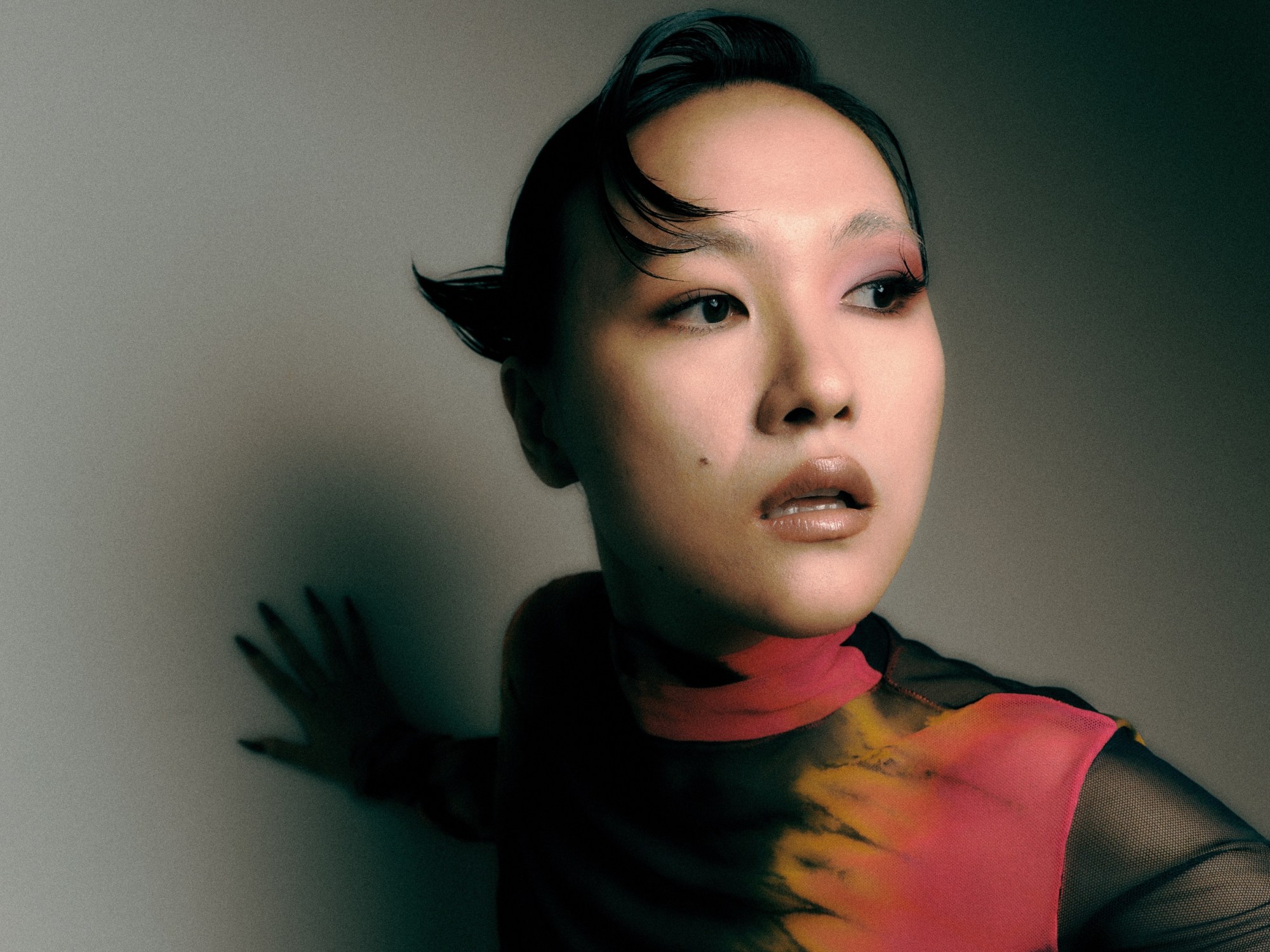
Hey Adai, thanks for taking the time to talk to us today. Could you tell us a little-known fact about yourself?
I started playing violin at the age of three, and I hated practicing back then. All the photos of me playing the violin looked miserable. But that early training shaped my sense of melody deeply. I think that’s why I constantly hear songs in my head. I’m also a passionate rock climber! It helps me stay physically strong, which in turn keeps my mind resilient.
The Bloom Project reimagines 1920s Shanghai “shidaiqu” through a feminist lens. What drew you to reinterpret this specific musical era? And how did you balance reverence for tradition with your own modern voice?
I grew up hearing those old Shanghai melodies on TV at my grandparents’ house or from relatives humming. They were part of the background of my childhood. Later, when I learned their history, I realized that era was the first time Chinese women could start imagining independence, like going to school, working, performing, even if that freedom was limited.
The music itself was born from cultural collision: Chinese folk songs meeting Western jazz when Shanghai became an international port city. Despite the complex colonial dynamics of that era, it created a unique fusion — shidaiqu literally means ‘songs of the era,’ capturing that specific moment of cultural intersection.
But most of those songs were written and produced by men, even the ones sung from women’s perspectives. So I wanted to revisit those stories from my own standpoint, as a modern woman who can write, produce, and speak for herself. I don’t see it as rewriting history, but continuing the conversation across a hundred years.
What does “blooming” represent to you personally and artistically?
For me, “blooming” is about growth through resistance and about breaking through the soil toward the light. Artistically, it’s the moment I stopped looking for someone else to validate my sound and trusted my own production instincts. Personally, it’s about embracing the process of turning struggle into strength.
How do you define and push the boundaries of C-pop on your own terms?
I see C-pop not as a fixed genre, but as an evolving global conversation. My approach is to blend Chinese traditional instruments and folk melodies with modern production, from EDM and house to synthpop and ambient textures. It’s about letting different cultural identities coexist, rather than one serving as decoration for the other.
What were some of the biggest technical or creative challenges in blending historical shidaiqu with electronic music production?
The biggest challenge was translating the warmth and imperfection of shidaiqu, which was all analog, live, and human, into a digital world where everything risks sounding too clean. I didn’t want the vintage texture to disappear under modern production polish.
Each song demanded a different process. For some, like Night Shanghai or A Lost Singer, I began with chords and melody, letting emotion lead before adding rhythm. For others, like River Run, the bassline came first and the pulse guided the whole arrangement. And sometimes inspiration came from unexpected sparks, like hearing a song in a café or discovering a production trick that opened new possibilities.
On a technical level, the hardest part was balancing space and density. In Wild Thorny Molihua, I used heavy dubstep beats, something bold and forceful, but also with this half-time feel that leaves room between the hits so that the toughness could echo. In Wuxi Tune, reconstructing a jazz-inspired folk arrangement into UK garage meant slicing, flipping, and reassigning notes across instruments, almost like rebuilding a living organism from fragments.
Emotionally, the challenge was finding authenticity in contradiction: how to let softness and strength, nostalgia and futurism, coexist without one erasing the other.
Many of your songs, like ‘Make Way’ and ‘Wild Thorny Molihua’, reclaim traditionally passive female archetypes. What inspired this feminist reinterpretation of classic Chinese songs?
In ‘Make Way’, the original Chinese song “rose rose I love you” praised the beauty of women, just like rose. The English adaptation romanticized and exoticized the “oriental rose.” I flipped it into a first-person voice — a rose that stands tall with thorns. So I added rap and RnB on top of a house beat to make it refreshing.
In ‘Wild Thorny Molihua’, I took what was once a soft, docile image — the jasmine flower — and turned it fierce, with dubstep beats and halting rhythms. I wanted to show that softness and strength can coexist. Beauty doesn’t mean fragility, and confidence doesn’t require permission.
What’s next for you?
Right now, I’m bringing The Bloom Project to live stages with hybrid performances that merge DJing, live vocals, and immersive visuals inspired by Shanghai’s golden era meeting contemporary club culture. I want each show to be a full sensory experience that mirrors the album’s time-traveling aesthetic.
I’m also ongoing my PhD in music at the University of Virginia, diving deeper into questions about sound, gender, and technology. That research is already influencing how I think about my next creative projects.
And of course, I’m already sketching new ideas for the next album, because blooming never really stops.
Follow Adai Song on Instagram.
 PURPLE MELON